
It was midnight when we arrived at Ubud. We were coming in after visiting one of the greatest and biggest Hindu temples of Indonesia. Have you heard of “Prambanan”? The mighty Gopurams of the Prambanan temple sprawl high enough to touch the sky. Though the temple is under restoration and the Vigrahas in the garbagrahams (sanctum sanctorum) are housing restored versions, and no rituals are being done! Yet! Yet! You can feel the divinity, the vibe and the spread of Hinduism in the area. Prambanan means the Parabrahmam, the almighty, the Trimurthi. And so the towers host all the three prominent Gods – Shiva, Vishnu and Brahma. And here they are in the form of figurines. Many thousands of years ago, this was the way hinduism was practised. But the present day Bali has no such thing. How or when did it change along the way, is something I still ponder!
Before arriving, I had researched Bali’s temples. I knew of the famous Kecak dance at Uluwatu, depicting the Ramayana. Naturally, I assumed Uluwatu must be a Rama or Hanuman temple. But it wasn’t. My search for familiar shrines—Rama, Shiva, Ganesha—yielded little. Only after visiting a few temples did I begin to understand the unique interpretation of Hinduism in Bali.
Rituals in Everyday Life
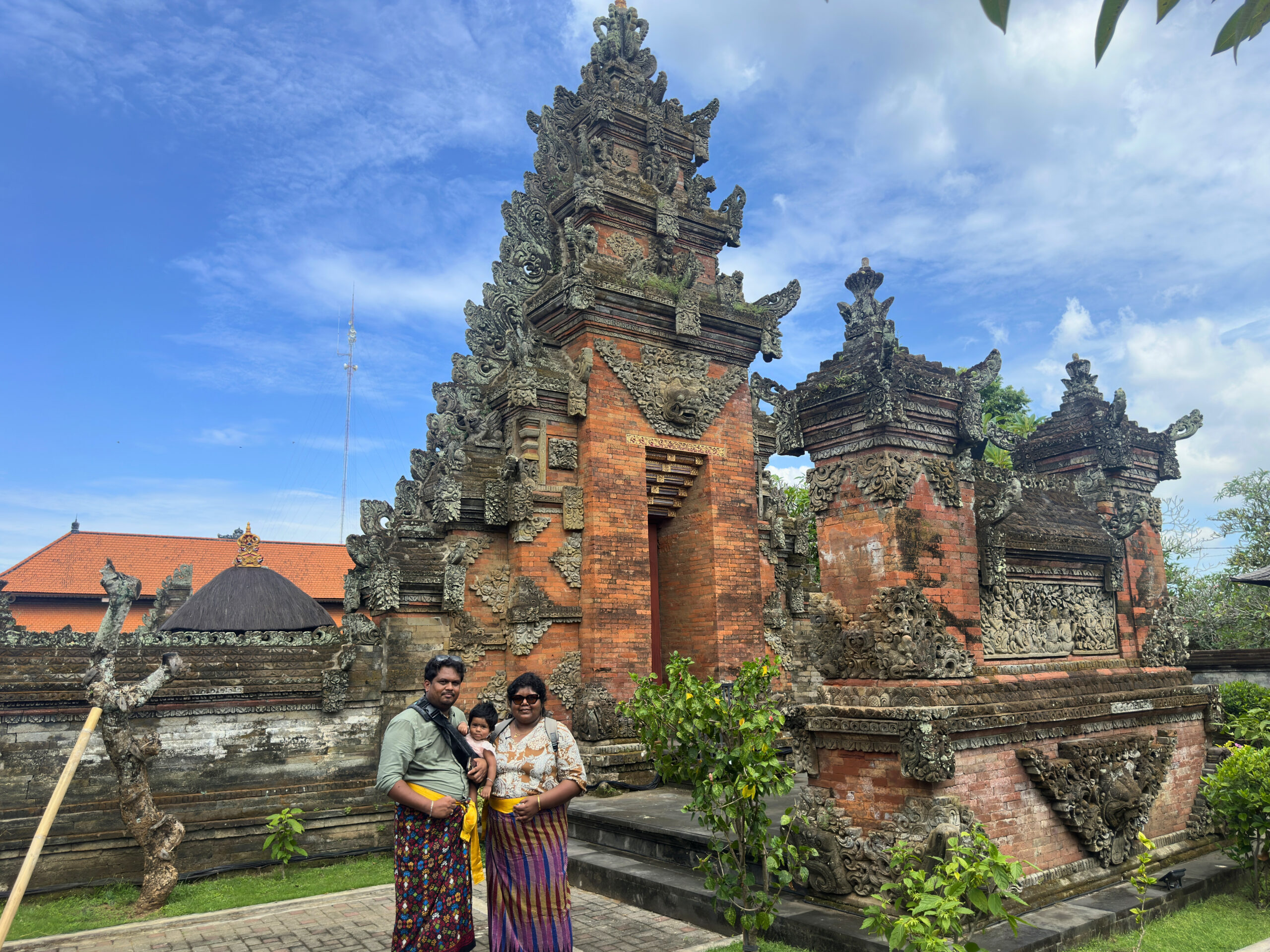
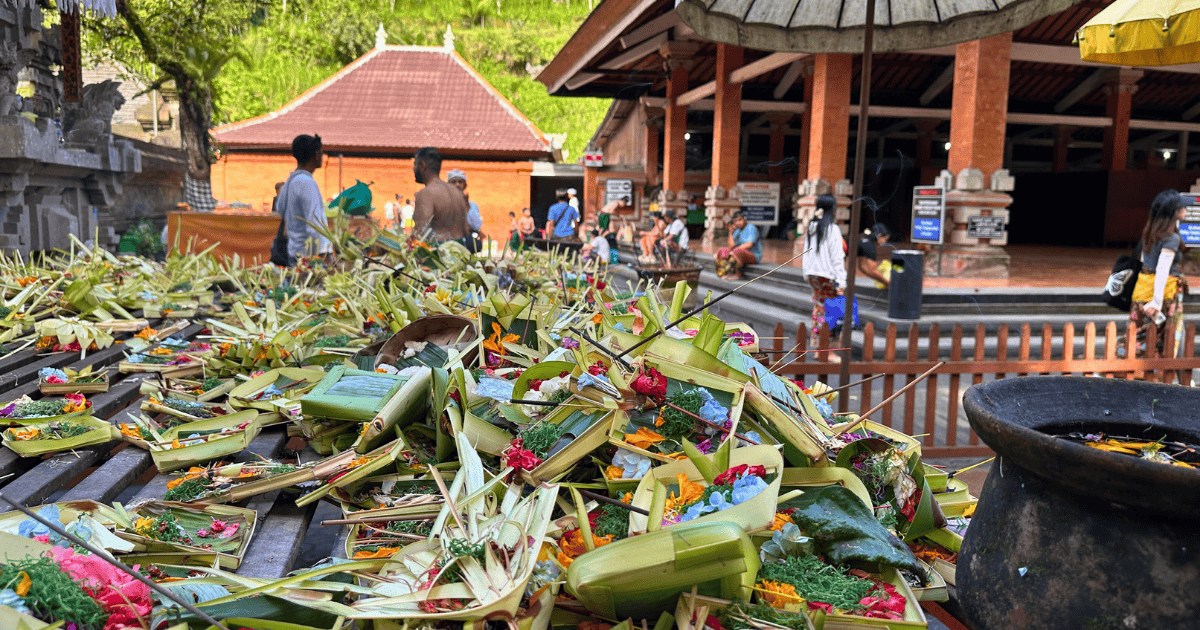
It was midnight when we reached Ubud. Even at midnight, Ubud welcomed us with warmth. That is Bali and Balinese people. The mild fragrance from the incense still lingered around. In the wall just by the side of the door of our room is a small space where we would have ideally placed a God’s idol but this one was empty. Empty but decorated. And below was the palm leaf or small palm basket filled with dried flowers. I have read about this too. Most of the shops have these offerings placed at their doorsteps. One should be careful not to step on it. And these are called Canang Sari. In spite of reading all these and watching about Bali, there were still so much to learn on this trip. And why has no one talked enough about the Balinese Hinduism made me wonder.
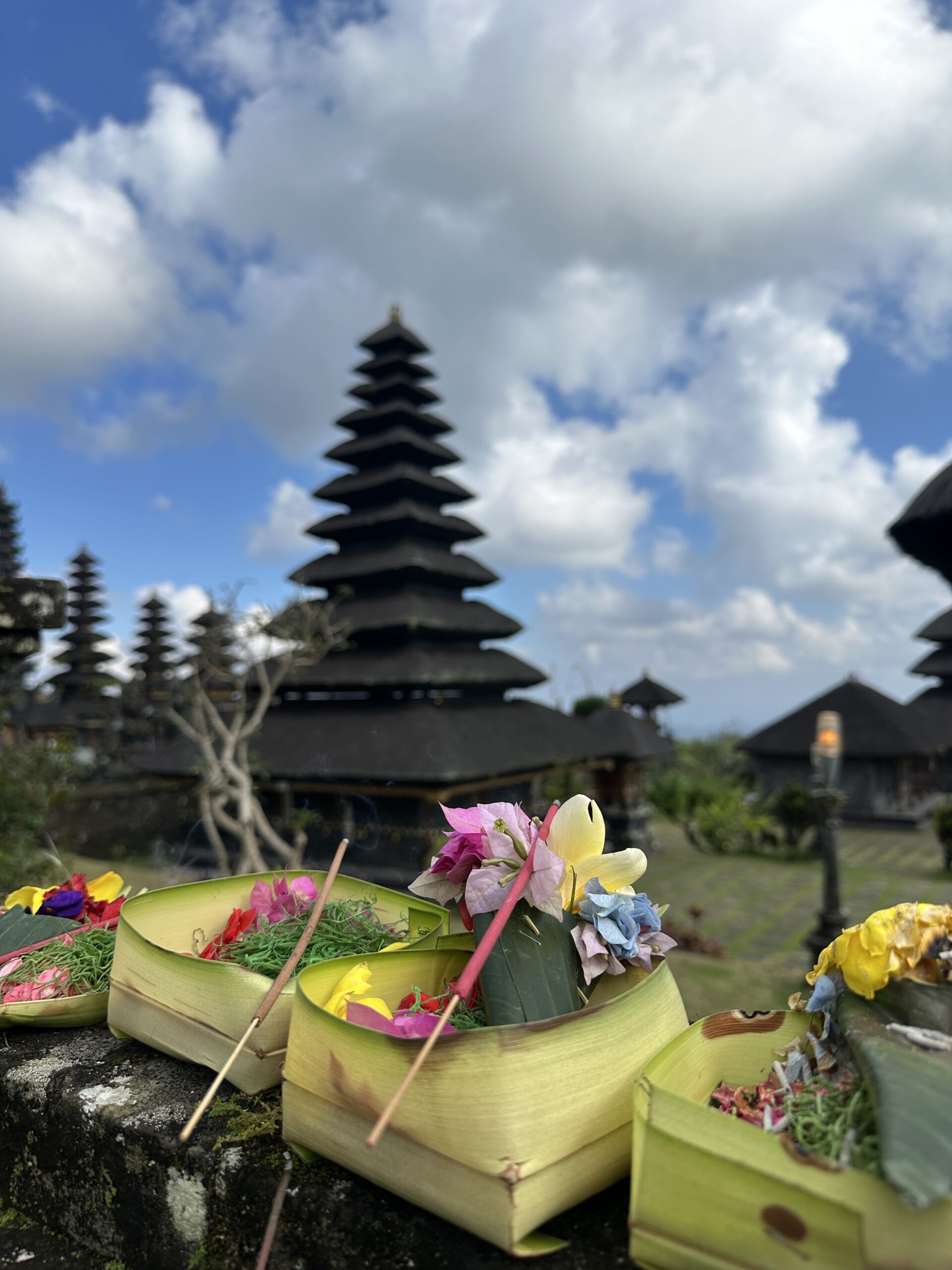
The sun had just risen over Ubud. The streets are already abuzz. Women clad in white lace shirts and colorful sarongs walk in tiny yet fast pace, similar to the walk of a Geisha. Their Sarongs limit them in taking big steps. Most of them carrying a palm tray filled with further tiny palm leaf baskets filled with colorful flowers and incense sticks. Some balance this basket on their hand, not even holding by hands. While some balance it on the palm of one hand and walk by. Between their fast pace walking they stop at places, to place the Canang Sari on the ground. Carefully pickup the smaller tray of flowers with the other hand, kneel down so effortlessly, place the offering and get up with the same charm. No bending over, no placing the tray down to pickup the offering, no slip of tray as they sway and walk! It is truly an art. I imagine myself trying to balance this basket and all I could think was how easily I could tumble over. The roads are hilly up and down, and yet they go on with elegance. An art that has been practised from childhood. An art that has been passed on from generations. But more importantly, this ritual is followed everyday. Every single day.
The First Encounter of the Empty Throne
Our first stop was Goa Gajah. I did the correlation of Gajah could mean Gajahanan, this should be a shrine for Lord Ganesha. I was again wrong. Gajah meant cave. We enter the cave that is guarded by spirits. The incense is so hard that I can hardly see which direction am walking. It is a pretty tiny cave actually, there is no way to get lost and still you cannot see what is ahead. But I was somewhat correct. There was an idol of Ganesha at one end, Shiva lingam at one end and an empty space in the middle which was steeped with the offerings.
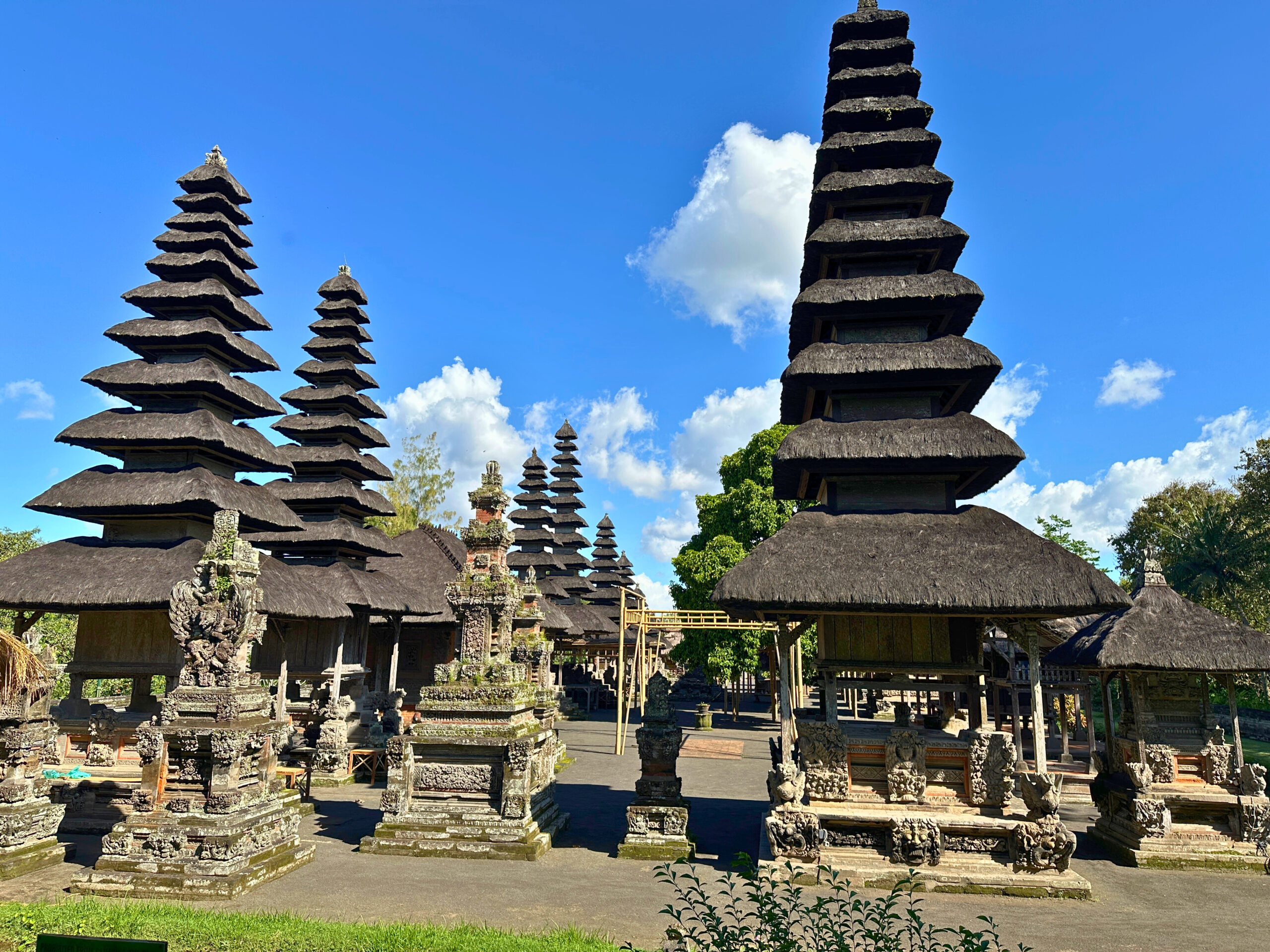
Outside the cave is a tall chair. An empty throne. An empty high throne with a figurine drawn on it. It does not look fancy! The figurine looks like meditating. I walk past it. The priest is doing pooja to what again looks like some empty space. We admire the yoga posture, the attire, the flowers and offerings. There is a temple tank. It looks like a Hindu temple but also not like one. Huge towers of thickly woven palm leaf structures adorn around. My driver says they are the costly palm hair! Once the palm tree bark gets old, they pull it apart like weaves of hair and make these towers to honour the spirits.
Of Home Temples and Ancestors
Most of the temples have the same format. Spaces to sit and do pooja. People walk in with baskets of offerings. And I am told the offerings include fish and chicken as well. I have seen this is in Buddhism. But this was the first time I was hearing that an offering made by hindu included non vegetarian food. And as we drove past more houses around Ubud, we get to see these tall palm leaf decorative structures in every house! I mean, with that kind of plot of land we would have constructed a two story building but here they have these palm leaf towering building structures. I get to know those are to honour their ancestors. And people according to their affordability make it as grand and as big as possible. I am still confused as what or whom they pray to. What is the difference between home temple and the temple that is common to villages and towns. Some temples in villages remain close! Can temples remain close? Is that allowed! Shouldn’t we do the honours and appease the Gods. But here the temples remain close. I am half minded to sneak into one of them and look around closely. But my driver stops us and points out that we are not dressed for it. I am dressed in a Kurta and fully covered and yet he mentions, we have to be dressed traditionally. Even he does not enter the temple cos he is wearing a pant and shirt.
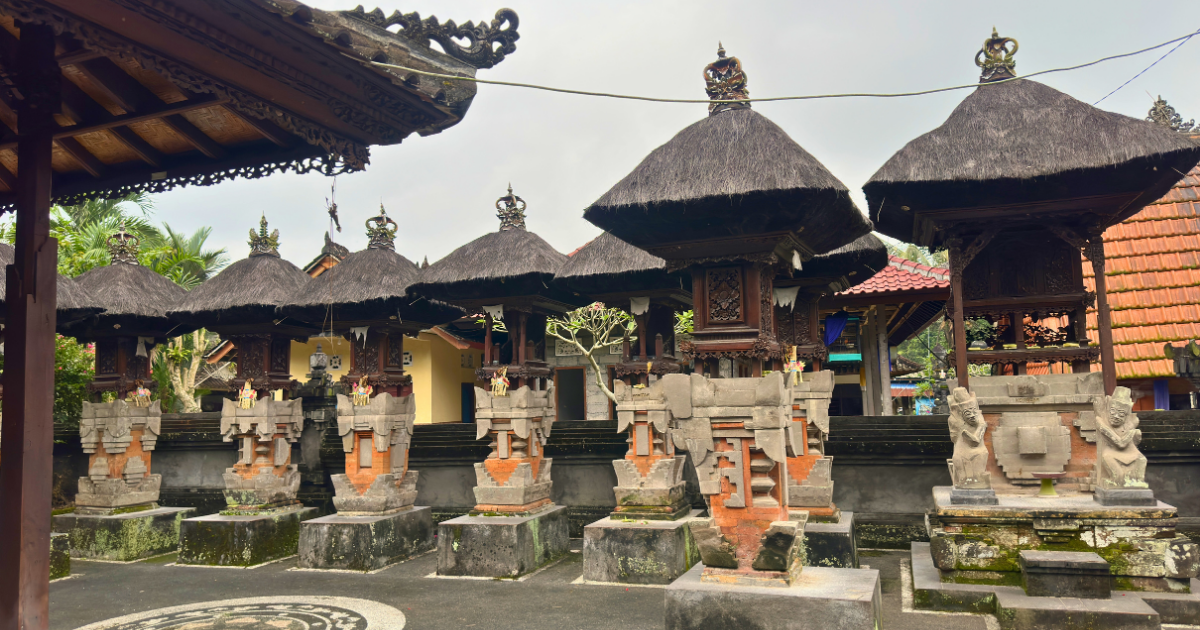
Our driver graciously takes us to his village home. We also get to see the simplicity of the Balinese homes. A common kitchen at the entrance of the house. A common space to sit and above that is like a big hen coop that stores rice. Then there is a bedroom. Toilets outside the house. Lots of space around the house. And then it is the temple. Home temple. And it makes sense now. Each of the temple have names of people. Their ancestors’ name. And everyday they offer and pray to their ancestors. At the feet of every temple is a Canang Sari placed. And that is when I noticed. Each of the Canang Sari not only have flowers and incense sticks. Some have fruits, some have candies, some have cigars and chips! A thank you to their ancestors with their favourites every single day.
The night fell and we decided to drag ourselves out for dinner. Not everyday we are at Ubud and we need to grab these opportunities of a vibrant neighbourhood. The more we walk through the streets, the more we saw the offerings placed on the ground and empty chairs. We were hopping over the offerings, careful not to step on it and kept running into more empty chairs. Some even had umbrellas over it. Our hope was to find more about it the next day. Our plan was to visit Besakih, the Mother of Temples. With the thought of that, we hogged in some more spicy sambal, sticky rice, crispy ducks and aiyam bakkar.
Besakih: The Mother Temple
Th drive to Besakih was pretty long. I chose this temple cos the internet was all over “The Gates of Heaven” temple. And so I decided to go the other way hoping to beat the crowd. I was not wrong. Besakih was filled with people but Indonesian people/ Balinese people. It is the holiest temple for the Balinese people. And it is not just one temple but a huge complex of 23 to 80 temples. Passing through all of these many temples, and after a climb we come to the main temple with Mount Agung at the backdrop. We decided to take a guide because we needed to discover the secret behind the chair, or rather the empty throne. We started our climb to Besakih. Reaching the ultimate God is never easy right, a climb is needed indeed.
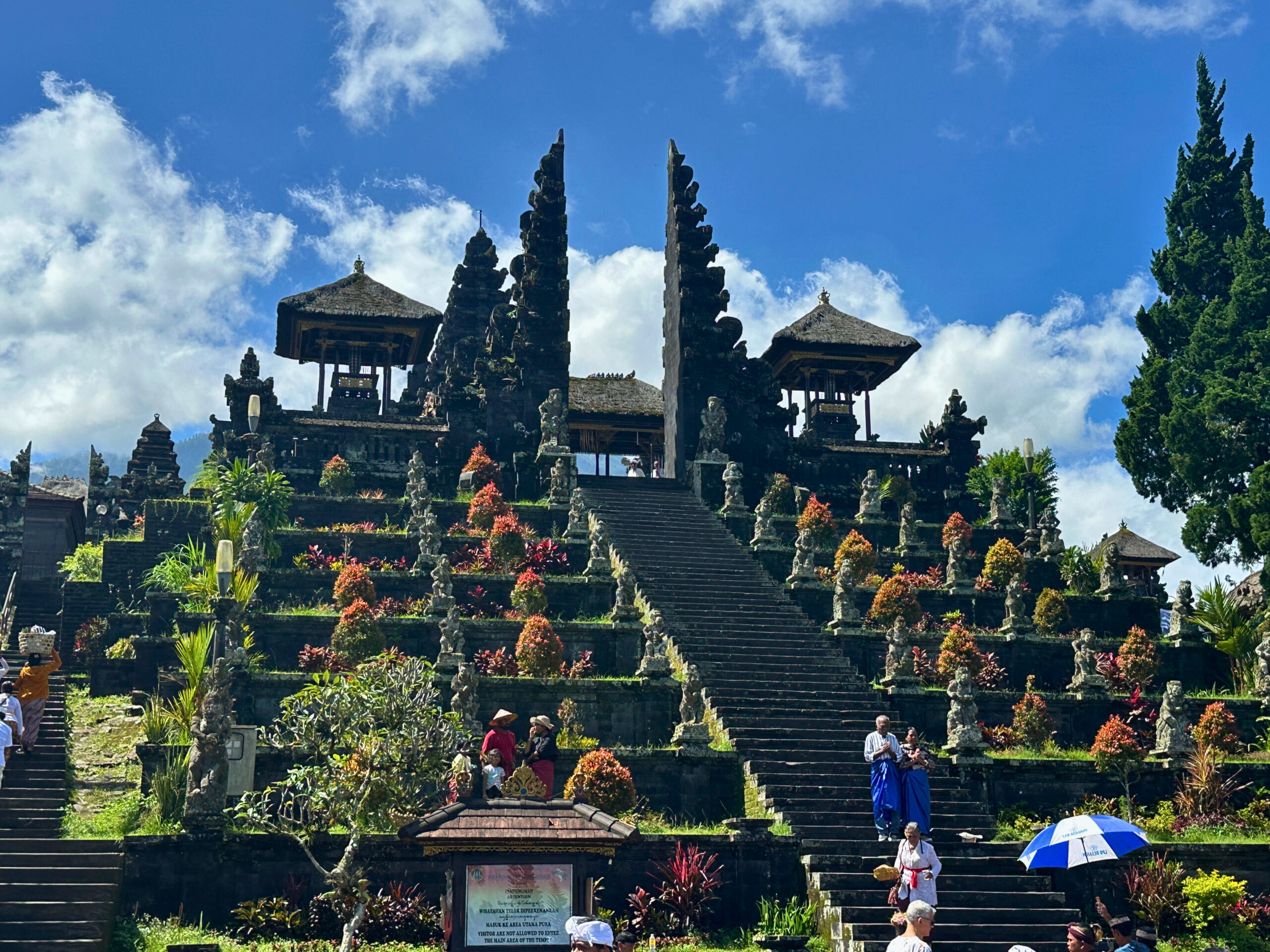
We pass through many small temples as we climb. Some have planks written of family names, some have planks written of occupation like gold smith or copper smith or carpenter and then it strikes me. I stop, stare and gawk. Wait?! What?! CASTE?!! I turn to the guide and he nods. So as we climb up the hill so does the rank of the caste gets higher. The temples get bigger. People wear the same clothes, same white shirts and sarongs and carry the same offerings but it matters to which temple they go to. It makes sense as why certain temples remain close in the villages. It is only when that particular sect or family had any function would they open the temple and pray. We stop by few temples and watch the people offer, the priest blesses them with holy water and they gracefully bow while seated.
The Revelation of the Throne
By the time we reach to the top I am pretty tired. It is quite a climb. Very few Balinese people are out there. Most of them do their prayers at their respective temple and leave. The main temple is where there are bigger thrones are placed. And I look for the meaning and ask the guide, “why is there an empty throne placed everywhere?” “It is not empty!”, snapped the guide quite astonished at the question. “Trimurti, the Parabrahmam is sitting on it”. “Trimurti?” I ask again. And he probably thought I did not understand the word, for he went, “Trinity!” “You mean Shiva, Brahma and Vishnu?” He seemed pleased with my question. He smiled and nodded with a sigh of relief. The Hindu Girl from India finally understands Trimurti.
He goes on to explain,
“We do not segregate God. We believe in the Creator, Destroyer and Preserver as one force. One cannot exist or function without the another. So we pray to the almighty. And give no form to the Trinity. It was only in later years they came up with the figurine form that is etched on the throne. The throne itself is called Padmasana and the almighty sits on top of it. The figure that you see atop is Acintya. More like the supreme force with fire raging around, so powerful that you cannot see directly at Him.”
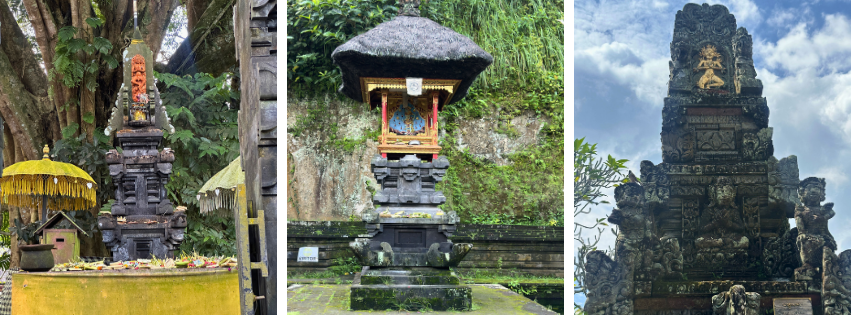
I lookup to take a closer look. “Well, what happened to the Goddesses?” I ask with not just curiosity but we need to also know where do they stand in the hierarchy right? Me being woman.
“Anyways all are part of the nature aren’t they?” He questions and stops. I do agree to that. As Indians we have Gods representing nature too. And we pray to nature. We have temples next to rivers and lakes. We pray to the Sun and Moon. We pray to the rain. It makes sense. But the eyebrows in my face had not settled yet. Probably the guide noticed it.
“We have Devi Sri, goddess of prosperity you would see Her holding paddy and there is Danu Devi, she guards the lakes. and alikes”
I nod my head. The priest asks us to sit down. And from the offering tray asks us to keep one flower in one ear, another flower in another ear, one on the head. Sprinkles holy water on our heads. Asks us to bow to the almighty and pray. We do as he says. And then he places rice on our forehead. Bali depends on farming a lot, you would have seen all these rice paddy field pictures on the internet anyways. So rice is symbol of prosperity and we are blessed.
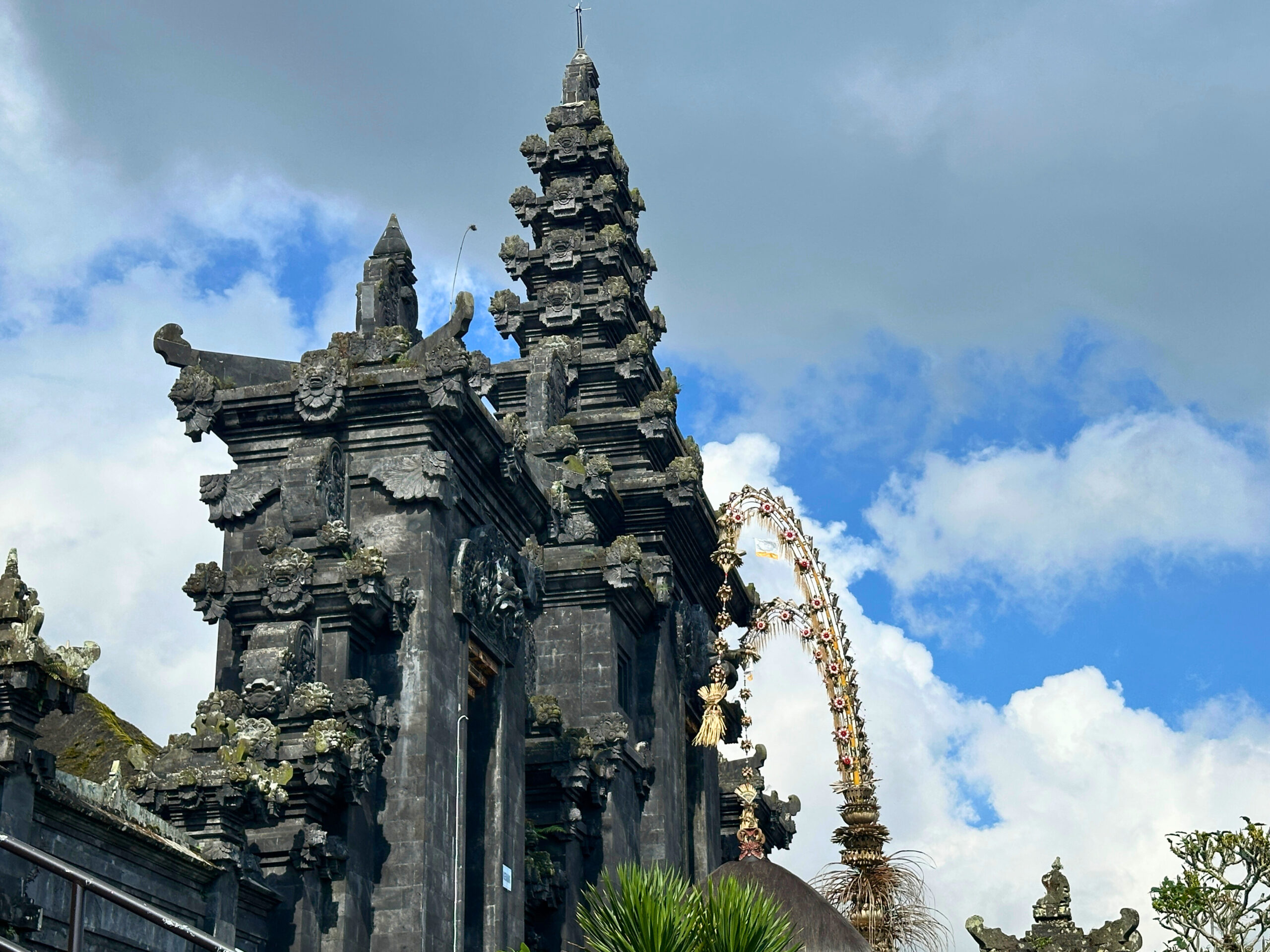
I walk back down past more incense sticks and fragrant flowers. The Canang Sari is not just a woven box with flowers. The flowers represent God. Green stands for Vishnu, Yellow for Shiva like fire, Red for Brahma and White for Ishwara (Trimurti). Am still amazed at how they follow the rituals diligently. How many percentage of Indian Hindus would do that? They have a uniform to visit temples, as a mark of respect and brings harmony to the lot. And here we are questioning, why can I not go in my nightwear to a temple. How many of us light a lamp everyday, let alone recite a sloka. Not me.
Reflecting Back
Spending ten days in Bali made me fall in love with their culture. I loved their form of Hinduism. It just felt pure, unified, and rooted in gratitude. No who is bigger than who kind of fight between the Gods. There is a good vs evil and good always triumphs over the evil story being reiterated many a times. Their rituals are meaningful, not that ours is not, but they follow it. They worship their ancestors everyday thanking them for the life they have today, the life they gave them today. I want to be more thoughtful like that while following our own rituals and be present. I hope to pass it on to the next generation. Because if we don’t stand together, it is easy to be broken apart. Bali is the only Hindu island amongst rest of the islands in Indonesia. And if you navigate to the other islands before landing in Bali, you will understand how invasion can lead to oppression of women.
Get to KNOW MORE on BESAKIH Temple
Pin IT




2 responses to “Balinese Hinduism from an Indian Hindu Perspective”
The last two statements are not accurate and incorrect. Bali is not a country 🙂 Our island along with other islands is a part of Indonesia. The Indonesian system of pancasila has allowed us to retain our Hindu identity and way of life. Jakarta on Java is more diverse and cosmo. And some places like Sumatra being more conservative in an Islamic sense. Our communities retain our identity and co exist.
The past is the past. At present we are fine the way we are. Oppression of women has been observed in many countries of Asia where the dominant culture is not the same one as the other islands of Indonesia; and you probably might have seen it there too?
But, your understanding of Balinese Hinduism from a spiritual and cultural angle is correct. Thanks for understanding us and appreciating our way of life
Thank you for the comment 🙂 I have corrected the last statement from country to island. We did visit Jakarta and observed the difference in culture. Needless to say blessed to have had our time at Bali and keeping our fingers crossed for the stars to align and visit Bali again 🙂 Thanks a lot for reading through.